
KEY POINTS
-
- New Hampshire gained a net of 2,046 new tax filers between 2022 and 2023
- Massachusetts has led inflow to the state, while New Hampshire has lost population to Maine and the South Atlantic region
- Approximately six-in-ten of the state’s residents in 2024 were born outside of New Hampshire
- Tax filers age 26-44 represented more than half of net growth, while the state lost a net of nearly 1,000 filers under age 26
- Filers with incomes between $25,000 and $50,000 led interstate movement both into and out of New Hampshire
- Research suggests family and friends, the natural environment, and employment opportunities were likely the largest influences on relocators’ decisions to move to New Hampshire
New Hampshire has long relied on interstate movement to grow its population and support the workforce. While relocation into the Granite State increased during the COVID-19 pandemic, recent data suggest that growth may be stabilizing and returning to prior pre-pandemic trends. Based on the recent data, younger working-age adults have led New Hampshire’s recent net population gains, which could help offset the state’s aging population and ongoing population decline due to more deaths than births within the state.
New Hampshire’s employment opportunities and strong economic influence from the metropolitan Boston area, as well as the natural environment and preferred amenities, have likely attracted people to the state. At the same time, ongoing affordability challenges may hinder people’s ability to move to, and remain in, the Granite State. Housing constraints, child care access, and educational and workforce opportunities continue to influence interstate movement decisions, particularly among younger adults and families.
This Issue Brief examines who is moving into and out of the Granite State, including the demographics of recent interstate movers, and offers considerations for improving affordability and continuing to support long-term population growth.
Where Are People Moving From?
Each year, the U.S. Internal Revenue Service (IRS) releases migration data on tax filers that move between states, counties, and other countries. The data are based on annual address changes reported on individual income tax returns, with filing households who report a new address generally counted as moving in or out of a particular area. Filing households can include more than one person, including couples filing jointly and any dependents such as children counted on returns. The IRS data compares addresses between tax filing years, with the most recent release spanning from 2022 to 2023. For example, if someone filed taxes in Massachusetts in 2022 and then filed from New Hampshire in 2023, the IRS would count that filer as a new arrival to New Hampshire during that period. While the data includes only tax filers and does not reflect all people relocating, it can provide more insight into where people are moving from, as well as the income and age characteristics of those movers.[1]
Between 2022 and 2023, New Hampshire gained 26,876 tax filers from other states, a net addition of 2,046 filers (a 45.3% decline from the previous 2021-2022 period) when accounting for the 24,830 filers who moved out of the Granite State during that time. However, this net change represents tax filers, not people; couples filing jointly or any dependents claimed on tax returns would be counted as one tax filer in these data. While net gains have declined in the recent data, they remain more consistent with trends recorded prior to the COVID-19 pandemic. Between 2019 and 2020, New Hampshire gained a net of 5,343 filers (a 129.5% increase from the previous 2018-2019 period), compared to a net increase of 2,105 filers between 2017 and 2018, two years before the onset of the pandemic.
New Hampshire gained the largest net number of tax filers from Massachusetts between the 2022 and 2023 tax filing periods, adding a net gain of 4,009 filers, a 26.8% decline from the previous 2021-2022 period. Movement from Massachusetts increased during the COVID-19 pandemic, with the Granite State experiencing a net gain of 5,922 filers (a 49.9% increase from the previous 2018-2019 period) during the 2019 to 2020 period. More recent declines in net growth from Massachusetts more closely fall within trends seen before the pandemic. Expanded remote work opportunities, accelerated retirements, and a preference for more rural spaces may have spurred increases during the pandemic, while a return to more in-office work and increased housing constraints may now be contributing to slower growth.[2]
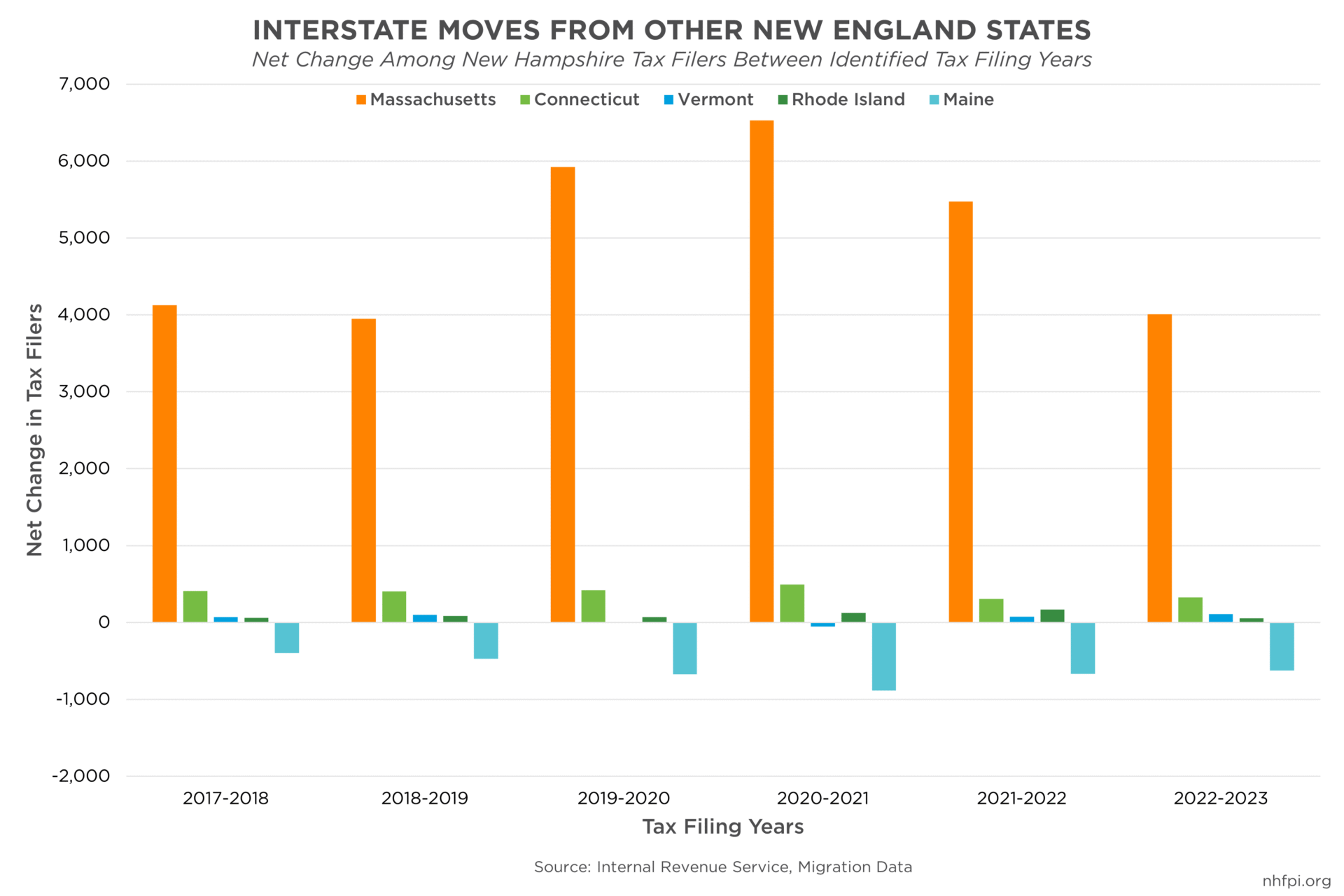
While New Hampshire has historically gained residents from Massachusetts, the state has consistently lost population to Maine, losing a net of 623 filers between 2022 and 2023, a 6.9% decrease from the previous 2021-2022 period. Out-of-state movement to Maine increased slightly during the pandemic, with New Hampshire losing as many as 674 net filers between 2019 and 2020 (a 43.1% increase from the previous 2018-2019 period), likely reflecting elevated housing pressures and affordability challenges. Despite a small net loss of 54 filers to Vermont from 2020 to 2021, movement from other New England states has remained relatively consistent over the last few years. As of the most recent data, New Hampshire gained net filers from Connecticut (326 tax filers, 5.5% increase from 2021-2022), Vermont (110, 48.6%), and Rhode Island (54, -68.0%).
Outside of New England, tax filing data suggest the Granite State has also gained population from other nearby northeastern states. Between the 2022 and 2023 tax years, New Hampshire gained a net of 226 filers from New York (-43.6% from 2021-2022) and 177 (-4.3%) from New Jersey, with net growth from New Jersey nearly doubling from 2017-2018. New Hampshire has consistently lost population to the South Atlantic region, likely driven in part by retirees seeking warmer weather and different lifestyle amenities.[3] Between 2022 and 2023, New Hampshire lost the largest net number of filers to Florida (854 filers, -32.6% from 2021-2022), North Carolina (429, -7.1%), and South Carolina (332, 14.9%). Smaller but still notable net losses also occurred between Texas (171 filers, -10.5%) and Arizona (54, 315.4%), with more Granite Staters moving to these states in recent years compared to two years prior to the pandemic.
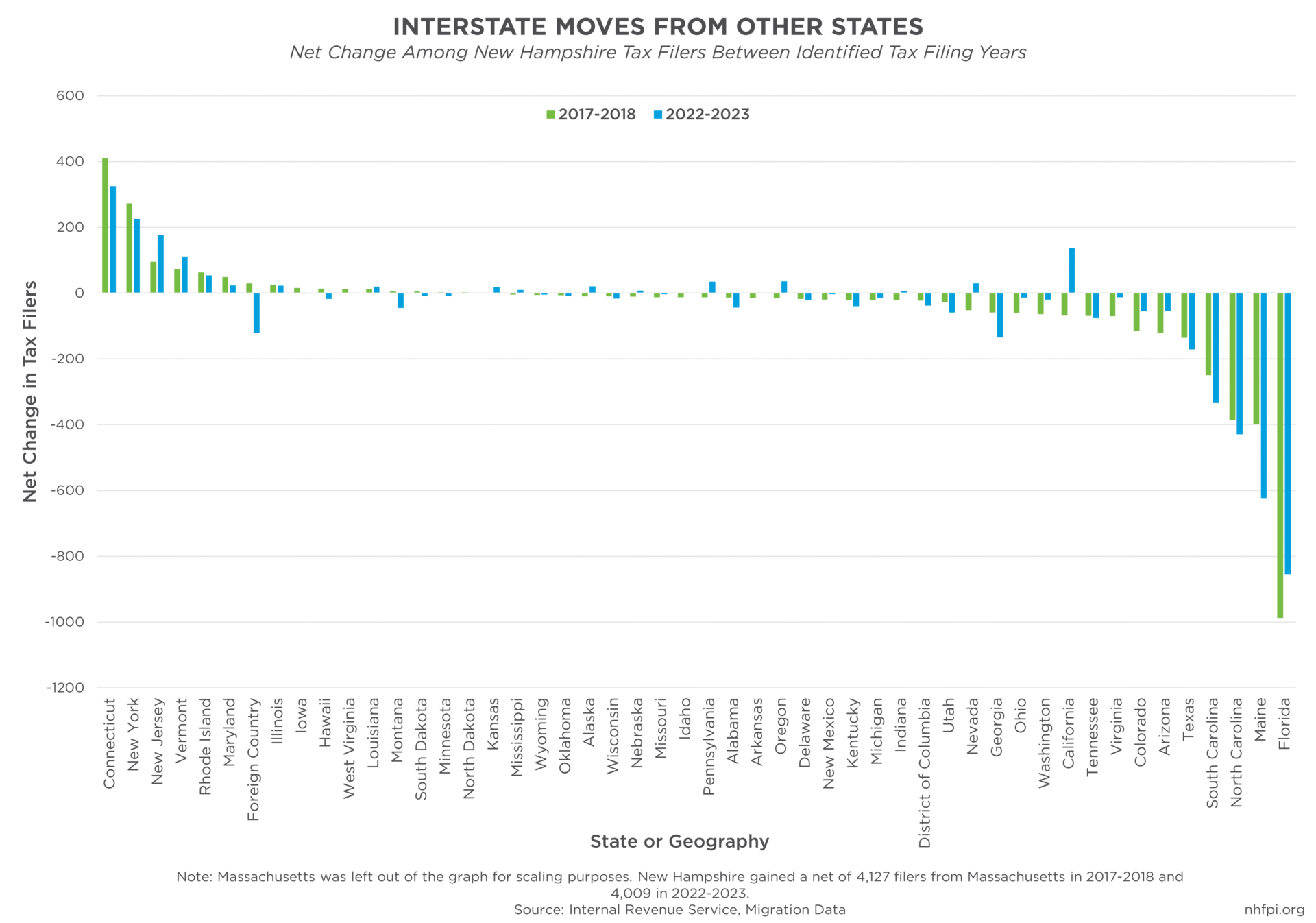
Similar trends among other states were recorded before and after the pandemic. However, New Hampshire saw a notable increase in movement from California compared to the 2017-2018 period, gaining a net of 137 filers between 2022 and 2023 (-43.2% from the previous 2021-2022 period). The state also experienced a net loss of 122 filers (771.4%) to other countries in the most recent data, reflecting broader national declines in people moving to the United States from other countries in recent years compared to before and during the pandemic.[4]
IRS migration data reflects similar trends identified through U.S. Census Bureau data, which provide more recent estimates of population changes. While both datasets measure interstate movement, Census data can provide a more complete estimate of total population gains. Unlike the IRS data, which measures the number of tax filers, the Census data includes non-filers, such as people out of the labor force, students, retirees who meet certain income thresholds and are not required to file federal taxes, and non-residents not filing taxes. U.S. Census Bureau data also seek to reflect the number of people moving, rather than counting filers that could reflect individuals or multi-person households. According to the most recent Census survey estimates, New Hampshire gained approximately 8,957 new residents through interstate movement in 2025, with consistent net growth from Massachusetts and net losses to Maine, Florida, and the Carolinas.[5]
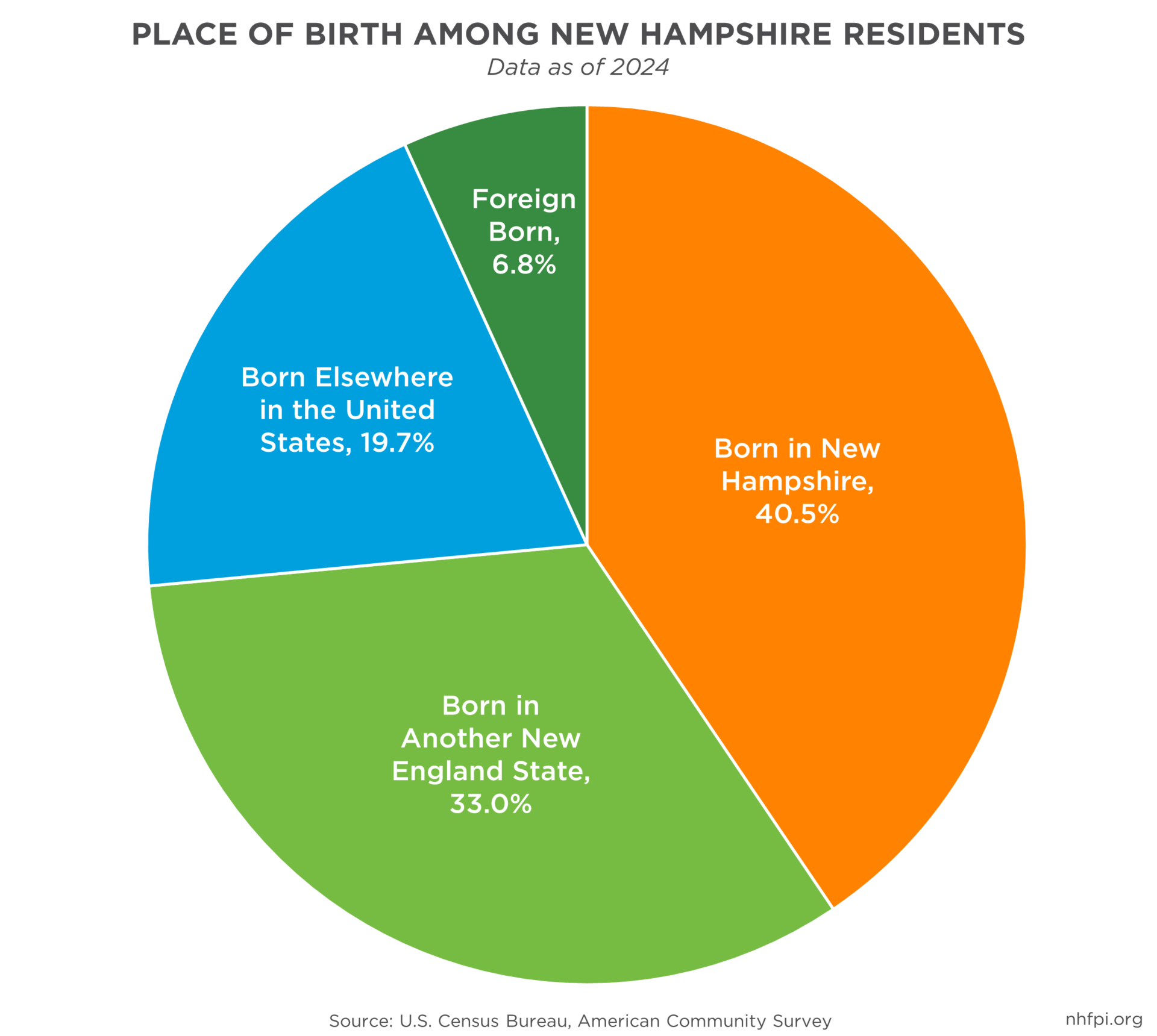
While New Hampshire experienced an increase in inbound movers during the COVID-19 pandemic, the state has long relied on in-migration to grow its population. As of 2024, nearly six-in-ten (59.5%) of New Hampshire’s residents were born outside of the state. About one-third (33.0%) were born elsewhere in New England, including about 25.4% who were born in Massachusetts. Approximately 19.7% were born in states outside of the New England region, while 6.8% of residents were born outside of the United States. Overall, New Hampshire relies more on interstate movement to grow its population compared to most other states. In 2024, only four other states had smaller proportions of their populations born within their state, including Nevada (28.5%), Florida (34.7%), Arizona (39.1%), and Wyoming (40.4%). In Washington, D.C., 34.8% of residents were born outside of the city, reflecting a smaller percentage as well.
Among those who were born in New Hampshire and later moved out of state, as of 2024, the largest concentration lived in nearby New England states, including Massachusetts (approximately 61,500 people), Maine (52,100), and Vermont (40,000). An additional 50,100 New Hampshire-born residents were residing in Florida, likely reflecting retirement-related relocation.[6]
Who Is Moving to the State?
Between the 2022 and 2023 tax filing years, New Hampshire experienced net growth from interstate movement across nearly all age groups, although residents under age 26 were the only group to experience a net loss. The state lost a net of 974 young adult tax filers, suggesting that more young adults may be leaving New Hampshire compared to the number moving into the state. However, adults age 26-34 and 35-44 led net population growth, accounting for more than half (56.9%) of total net gains during the same tax period. Representing smaller numbers, New Hampshire also experienced net growth among filers who were older adults age 65 and older, who comprised about 21.0% of overall net growth in filers.

Recent data suggests there may be a shift in the age groups driving population growth across the Granite State. Based on IRS migration data from 2012 to 2013, the most historically reliable information publicly available, older adult tax filers represented approximately 57.0% of net growth from interstate movement into New Hampshire during that period. Younger adults age 26 to 44 years comprised only about 43.0% of net growth combined, while the state lost a net of filers under age 26 (458 filers) and age 45-54 (116).[7]

New Hampshire saw interstate movement across all income groups between 2022 and 2023, although households with low and moderate incomes accounted for the largest share of relocators. Tax filers with incomes ranging from $25,000 to $49,999 represented approximately 23.3% of inflows to New Hampshire and 25.7% of outflows to other states. Filers earning between $100,000 and $199,999 also comprised a larger amount of interstate movement, accounting for about 18.1% of inflows and 15.9% of outflows during the same period. Tax filers at the lowest and highest ends of the income scale, including those with incomes below $10,000 or above $200,000, represented a smaller share of movers overall. Households with the highest incomes represented about 10.1% of inbound movers and 7.4% of outbound movers.

New Hampshire’s interstate movement trends are similar to other New England states, with households with incomes between $25,000 and $50,000 driving population changes. At the higher end of the income scale, New Hampshire attracted a large share of households with moderate and higher incomes. New Hampshire had the largest share of inbound tax filers with incomes between $100,000 and $200,000, and one of the highest shares among filers with incomes above $200,000, second only to Connecticut; however, Connecticut saw larger overall gains among higher income households, adding about 4,975 new tax filers earning $200,000 or more compared to New Hampshire’s addition of around 2,680 new filers within that same income group. While a lower percentage of overall movers, about 7,041 filers with over $200,000 in reported income moved into Massachusetts, New England’s most populous state, between 2022 and 2023.
Why Are People Relocating?
Based on survey data collected by the University of New Hampshire, approximately 40% of both recent movers to New Hampshire and established residents identified family as a key reason for relocating to and remaining in the state. Among recent movers, defined as people who moved to New Hampshire within the last ten years, more than 30% also identified employment as a key leading reason for relocation, highlighting New Hampshire’s ability to attract young workers in part due to close proximity to the metropolitan Boston area. Established residents who had lived in the state for more than ten years identified the state’s natural environment and quality of life as key reasons for remaining, citing factors like a sense of safety and close proximity to natural amenities. While taxes, culture and lifestyle, and the economy were other themes identified in the survey data, fewer participants listed these factors as their primary reasons for moving to and remaining in the Granite State. Among these less-impactful factors in moving decisions, taxes were less likely to be influential for residents under 50 years old than culture and lifestyle.[8] Key national research similarly suggests that while taxes may influence some interstate moves, family and community connections, employment opportunities, and amenity preferences likely have a larger influence on relocation choices overall.[9]
Separate and more recent survey data from Stay Work Play New Hampshire highlighted several key factors shaping young Granite Staters’ perceptions of living in the Granite State. While most participants age 18-40 valued the state’s outdoor recreational amenities, natural environment, and sense of safety, some of the largest concerns centered on affordability and access to services. Approximately 85% of respondents believed child care and housing affordability in New Hampshire were worse compared to other states. Health care was also highlighted as a significant issue, with 75% believing that mental health care access was worse and 64% expressing similar concerns about health care overall. Education and career opportunity perceptions were also mixed, with 60% rating colleges and 52% rating schools less favorably; about half (50%) believed that New Hampshire was worse than other places for jobs and career trajectories. Social life, nightlife, and a sense of community were also ranked poorly among all age cohorts in the survey. Taxes were considered more affordable in New Hampshire than other places by 57% of respondents, but less affordable by 30%, and about the same by 13%, suggesting New Hampshire was not a universal draw based on tax policy alone.[10]
Looking Ahead: Addressing Affordability Constraints
While New Hampshire has gained a net of younger tax filers based on the recent data, retaining families in the Granite State amidst affordability constraints may remain a challenge.[11]
Housing
A family purchasing a median sale price single-family house in 2025 would have needed to earn over $158,000 to afford the monthly mortgage, with an average 30-year fixed loan interest rate, and property tax payments without becoming cost burdened by housing (paying more than 30% of their income on housing costs). With the median price of a single-family house increasing by 78.3% since 2019, many families are finding it harder to enter into the homeownership market and remain in the state.
Increasing housing construction, through infrastructure investments or regulatory and zoning changes, may help increase the availability of homes on the market and in turn bring down costs. Increasing not only the availability of housing units, but the variety of housing types available as well, could provide new homebuyers with options to meet their differing housing and financial needs. In addition, support for current homeowners or renters, such as mortgage or rental assistance or property tax relief, could also help families remain in their homes and afford other essential costs.[12]
Child Care
Child care access and affordability also remain key concerns for families and could impact whether or not someone decides to remain in the state. During 2025, the average price for an infant and a four-year-old in center-based care was nearly $30,000 per year, or 24% of the median household income for a married couple with at least two children under five.
Expanding support for child care providers could help stabilize the workforce and increase the availability of providers across the state. Additional investment and support for assistance programs, such as the New Hampshire Child Care Scholarship Program that provides financial support for eligible families to help afford child care, could help keep young parents in the workforce and reduce financial strain on household budgets.[13]
Workforce Development
Continued workforce development may also help retain more young workers in the Granite State. Based on the recent tax data, New Hampshire continued to see a net loss of younger adult tax filers under age 26, who play a key role in filing entry level jobs and supporting the workforce. In 2020, approximately 56% of the state’s high schoolers left New Hampshire for a four-year college or university, with job and networking opportunities likely keeping young adults out of the state after graduation.
Higher education affordability may also play a role in out of state movement. New Hampshire provided the smallest amount of state and local funding for public higher education of any state in the nation during fiscal year 2024, placing higher education costs on students who may seek more affordable options in other areas. Increased support for higher education, such as expanded scholarships for in-state students and more investments in internship-to-career pathways, could help encourage more young adults to remain in New Hampshire upon graduation.[14]
With the number of deaths outpacing the number of births in New Hampshire since 2017, attracting and retaining young workers to the state, while also improving affordability, will be crucial for continuing to grow the workforce and larger economy. While these policy approaches may help lessen some burdens for Granite Staters, affordability challenges have developed over decades and will require multi-pronged, ongoing efforts to help ensure New Hampshire’s policies and workforce can meet the needs of both current and future residents.
Appendix

End Notes
[1] See the U.S. Internal Revenue Service, SOI Tax Stats – Migration Data. All IRS data retracted and analyzed for this report was taken from the migration data webpage. For more information on methodology, see the IRS’ Migration Data Users Guide.
[2] See the U.S. Census Bureau’s May 2024 article, More People Moved Farther Away From City Centers Since COVID-19.
[3] See the U.S. Census Bureau, Census Regions and Divisions of the United States and the Center on Budget and Policy Priorities August 9, 2023 report State Taxes Have a Minimal Impact on People’s Interstate Moves.
[4] See the U.S. Census Bureau’s March 2026 article, Net International Migration Down in Every State and Most Counties.
[5] See the U.S. Census Bureau’s Population Estimates Program, State Population Totals and Components of Change: 2020-2025 and American Community Survey, State-to-State Migration Flows. For the most recent analysis of Census Bureau data, see NHFPI’s February 2026 blog, New Hampshire Continued to Rely on Migration from Massachusetts for Population Growth in 2025.
[6] See the U.S. Census Bureau, American Community Survey, State of Residence by Place of Birth Flows.
[7] The IRS adjusted their methodology during the 2011-2012 tax cycle, with age-based data only becoming available after the adjustment. Between 2011-2012, New Hampshire gained a small net number of new tax filers, with age-based data likely not being statistically significant. For those reasons, data from 2012-2013 is likely the most historically reliable data regarding the demographics of those moving into New Hampshire. For more information on the IRS’ methodological change, see their webpage, SOI Tax Stats – Migration Data.
[8] See the University of New Hampshire, Carsey School of Public Policy’s July 14, 2020 brief Why People Move to and Stay in New Hampshire.
[9] See the Center on Budget and Policy Priorities August 9, 2023 report State Taxes Have a Minimal Impact on People’s Interstate Moves and the Tax Policy Center’s May 18, 2026 analysis “High-Tax to Low-Tax” Headlines Miss The Complexity of Interstate Migration.
[10] See Stay Work Play New Hampshire, New Hampshire Quality of Life Survey 2025.
[11] For more analysis on affordability and the cost of living, see NHPFI’s October 2025 Report, Affordability Eroded: Changes to the Cost of Living in New Hampshire.
[12] For more analysis on housing costs and availability, see NHFPI’s March 2026 Issue Brief, High Prices and Low Supply Continue to Impact Housing Affordability in New Hampshire. For more analysis on property taxes, see NHFPI’s April 2026 Report, Property Taxes in New Hampshire: How They Work and How They Compare and May 2026 blog, State Property Tax Relief for Homeowners Available Through June 30.
[13] For more analysis on child care costs and availability, see NHFPI’s May 2025 Issue Brief, Workforce for Early Childhood Care and Education Declined 8 Percent in 2024, Child Care Tuition Rates Remain High and February 2025 Issue Brief, The Economic Impact of the Granite State’s Child Care Shortage.
[14] For more analysis on public higher education, see NHFPI’s August 2025 Issue Brief, New Hampshire Continues to Be One of the Lowest Funders of Public Higher Education in the Country and December 2024 Publication, New Hampshire Policy Points, Second Edition, K-12 and Post-Secondary Education.