
First published in Manchester Ink Link, April 3, 2026.
This week, NHFPI released a new analysis of New Hampshire’s housing market, highlighting how high prices, limited supply, and rising rents continue to challenge affordability. While price growth has slowed in some areas, housing costs still outpace incomes, limiting options for renters and prospective homebuyers statewide. Below are three key takeaways.
#1. Home Prices Remain Historically High Despite Slowing Growth
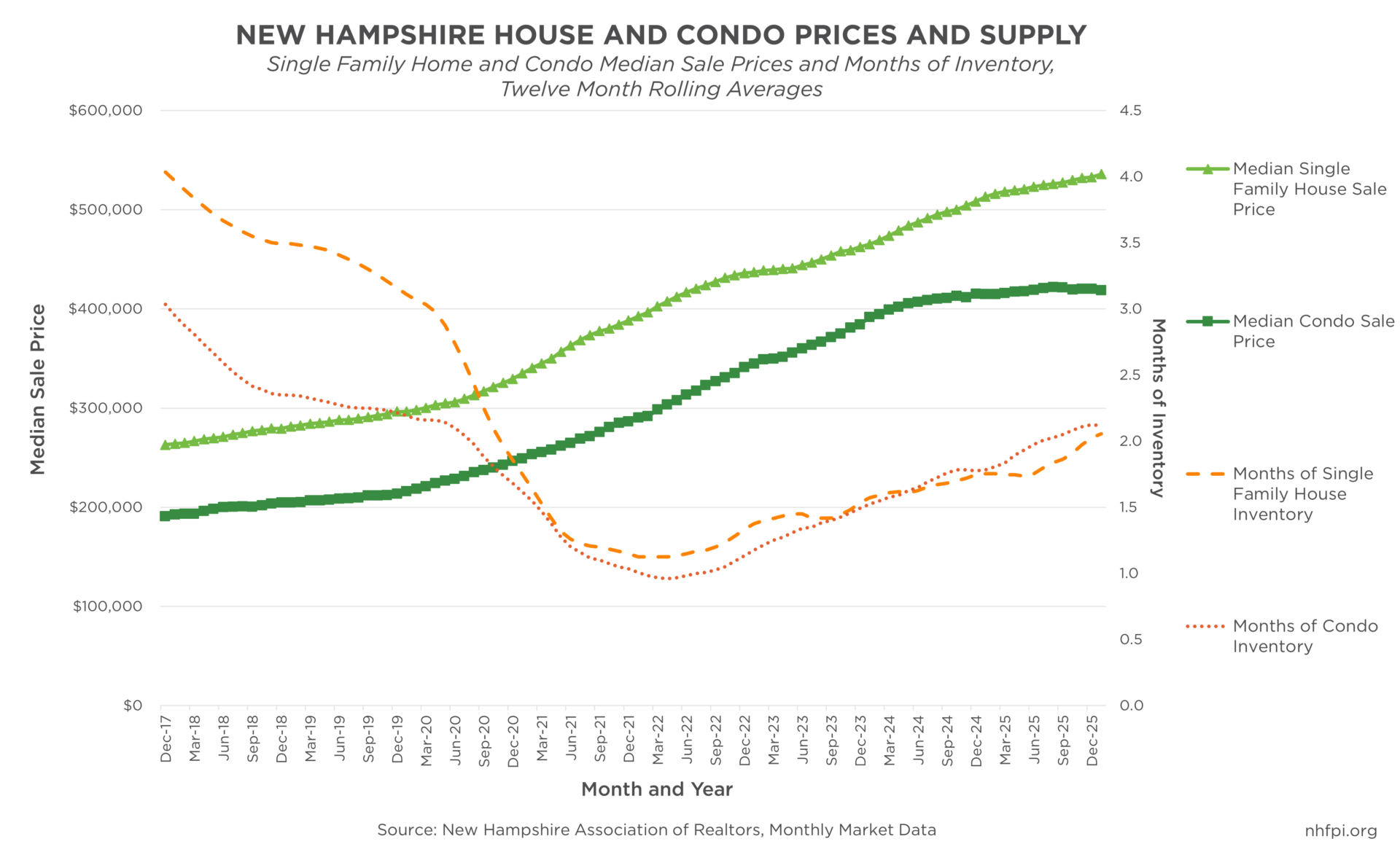
Although price increases have moderated, the cost of buying a home in New Hampshire remains near record levels. Median home prices reached $535,000 in 2025 and have stayed above half a million dollars into 2026, far outpacing income growth and keeping homeownership out of reach for many households.

#2. Housing Supply Is Improving Slightly but Still Far Below Demand
Inventory has increased modestly since pandemic lows, but New Hampshire’s housing supply remains well below balanced market levels. With an average of only 1.8 months of supply in 2025 and tens of thousands of units still needed, limited availability continues to push prices higher and restrict options for buyers and renters alike.
#3. Renters Face the Greatest Affordability Pressures
